




What is a sliding disc coupling and how does it work?
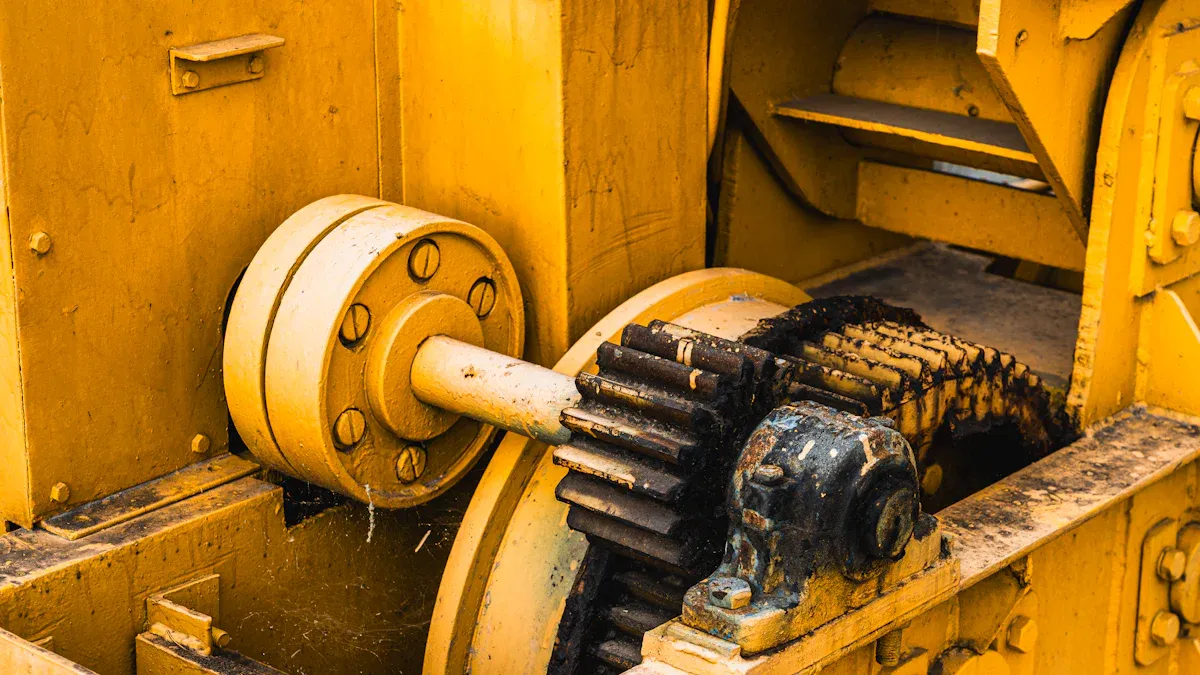
You find a sliding disc coupling in lots of machines. It connects two shafts together. This device uses thin metal disks that can bend. The disks link the shafts and let them move a little. This helps if the shafts are not lined up right. You use it to move torque from one part to another. It helps your equipment work well even if the shafts move or bend. Factories and plants use sliding disc couplings in their machines. They do this to make their machines work better and last longer.
Key Takeaways
A sliding disc coupling joins two shafts together. It lets them be a little out of line. This helps machines work smoothly.
These couplings do not need maintenance. You save time and money. They do not need oil or grease.
They can handle strong force and sudden shocks. This makes them good for hard jobs in factories.
Check for damage often. Replace broken parts to keep machines working well.
Pick the right disc coupling for your machine. This helps your machine work better and last longer.
Sliding Disc Coupling Overview
Definition
A sliding disc coupling joins two spinning shafts in a machine. You use it to move power from one shaft to another. It works even if the shafts are not lined up. The main part is a group of thin metal discs. These discs bend and slide as the shafts spin. This lets the coupling fix small alignment mistakes. International rules say a metallic disc coupling uses one or more flexible metal pieces. These pieces connect to both sides of the coupling, spaced the same from the center. This setup helps machines keep working well, even if the shafts move during use.
Here is a table that shows how a sliding disc coupling compares to another common type, the bellows coupling:
Feature | Sliding Disc Couplings | Bellows Couplings |
|---|---|---|
Torsional Stiffness | Very stiff, zero backlash | High stiffness, but may have backlash |
Misalignment Tolerance | Angular and parallel misalignment | Limited tolerance, less flexible |
Torque Capacity | High torque relative to size | Moderate torque capacity |
Speed | Suitable for moderate to high speeds | Generally lower speed ratings |
Chemical Resistance | High resistance to harsh chemicals | Vulnerable to certain chemicals |
Core Function
A disc coupling does more than just link shafts. Its main job is to move torque, which is the force that spins things. The discs bend as the shafts turn, so the coupling can fix misalignment. This keeps your equipment safe, even if the shafts are not straight or move a bit.
A sliding disc coupling also helps in other ways:
It takes in shock loads and sudden jumps in torque, which protects your machines.
It cuts down on vibrations, so your equipment runs smoother.
It handles thermal expansion, letting shafts get bigger or smaller with heat.
It does not need much care, so you save time and money.
You can see the main mechanical ideas in the table below:
Mechanical Principle | Description |
|---|---|
Torque Transmission | The discs bend to move power between shafts well. |
Misalignment Accommodation | The coupling fixes angular and axial misalignment, lowering machine stress. |
Damping of Vibrations | It lowers harmful vibrations and peak torques. |
Overload Protection | It helps stop damage from sudden overloads. |
Electrical Insulation | It can block electric currents between connected machines. |
Maintenance-Free | You do not need to oil or fix it often. |
High Shock Load Handling | It can take high shock loads, making it strong. |
You often see sliding disc couplings where you need high torque and flexibility. Their design lets you put them together fast. They also work well in tough places, since they stand up to chemicals and heat. If you need to join shafts that might move, a disc coupling gives you the strength and performance you need.
Disc Coupling Components
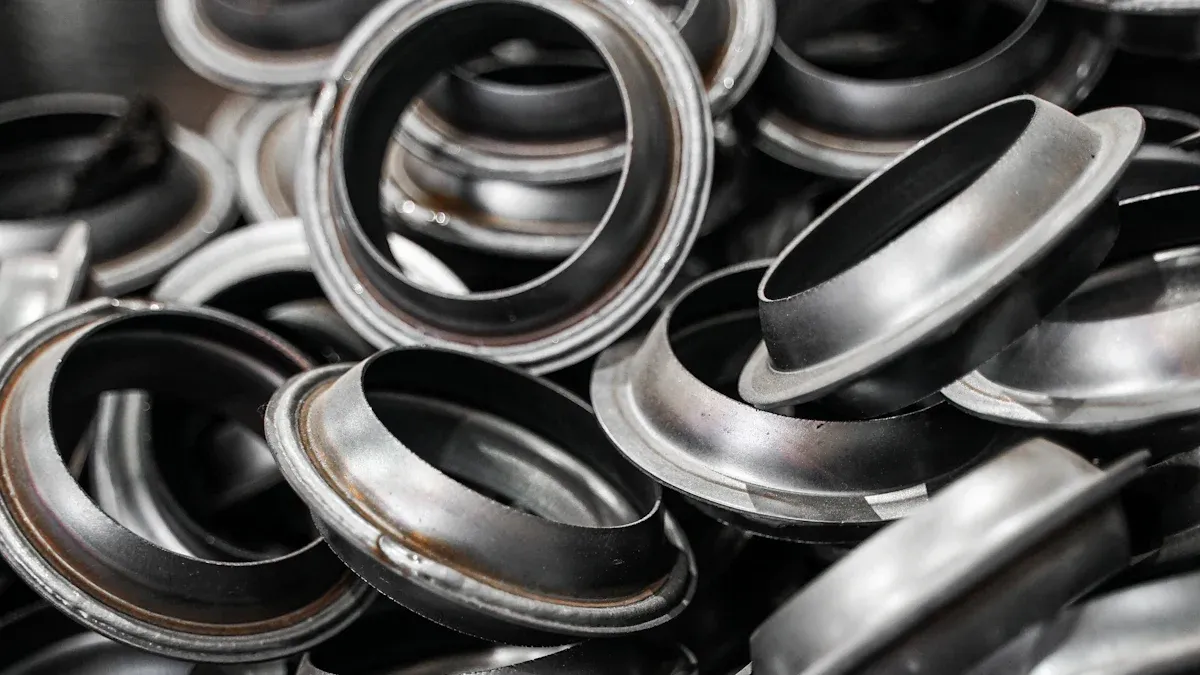
Main Parts
When you look at a disc coupling, you see several important parts. Each part has a special job in the flexible coupling. Here is a table that shows the main components and the materials used:
Component | Material |
|---|---|
Discs | Stainless Steel |
Hubs | Stainless Steel |
Composite Discs | Lightweight Composite |
The discs form the heart of the flexible coupling. You find them stacked together in a disc pack. Hubs connect to the shafts on each side. Bolts hold the disc pack and hubs together. Some coupling designs use composite discs to make the unit lighter.
Roles in Operation
Each part in a disc coupling helps the flexible coupling work well. The discs bend and flex as the shafts turn. This movement lets the coupling handle misalignment and transfer torque. Hubs attach to the shafts and keep everything in place. Bolts secure the disc pack and make sure the coupling design stays strong during use.
You benefit from maintenance-free features in many flexible coupling designs. These couplings do not need oil or grease. The design reduces wear and tear, so you spend less time on upkeep. If a disc or bolt wears out, you can replace just that part. This makes the disc coupling last longer and saves money.
Tip: Always check the flexible coupling for signs of wear. Replace worn parts to keep your machine running smoothly.
A disc coupling stands out because it has no moving parts that rub together. This means less abrasion and longer life. The flexible coupling can handle many load cycles and still work well. You get a reliable connection that keeps your equipment safe and efficient.
Working Principle

Torque Transmission
A sliding disc coupling helps move torque between two shafts. The main part is called the disc pack. Thin metal discs are stacked together and held by bushings. When the shafts turn, the discs bend and flex. This lets the coupling move torque smoothly. You can see this in Oldham and KD disc couplings. The flexible disc pack can pivot as it works. It still moves torque even if the shafts shift a little.
You get many good things from this design:
The disc pack does not get tired fast. It can bend many times and still work.
The disc pack is stiff in the middle. This helps tools like torque meters spin smoothly.
The coupling moves torque with almost no energy loss. This makes your power system work better.
You do not get backlash, which is good for machines that need exact control.
Here is a table that shows how sliding disc couplings help your system work better:
Evidence Point | Description |
|---|---|
Energy Loss Reduction | Sliding disc couplings cut down energy lost from friction, so power moves better. |
Backlash Minimization | The design keeps backlash very low, which helps with control. |
Enhanced Load Capacity | The flexible discs let you carry more load and lower side forces on shafts. |
Efficiency Improvement | Some couplings can be almost perfect, with efficiency up to 0.999925. |
You use a sliding disc coupling when you need to move a lot of torque. The design lets you move torque with little wear, so your machines last longer.
Misalignment Compensation
Machines often have shafts that do not line up. A disc coupling helps fix this problem. The discs can bend and flex. This lets the coupling handle different kinds of misalignment.
Here is a table that shows how the design works:
Type of Misalignment | Design Feature |
|---|---|
Angular Misalignment | A single-disc design bends like a cone to fix small angle mistakes. |
Parallel Misalignment | A two-disc design with a spacer lets each disc bend the other way to fix offset mistakes. |
Axial Misalignment | The coupling lets the shafts move in and out a bit without too much force. |
Reaction Forces | The discs bend easily, so there is not much force on bearings. |
Torque and Misalignment Capacity | You can move a lot of torque and fix misalignment in bigger machines. |
You see disc couplings in many machines because they fix misalignment and move torque at the same time. The flexible discs keep your machines safe and working well. You do not need to worry about too much force or extra wear. The coupling works even if the shafts move or bend.
Tip: Check your coupling for signs of wear or tired discs. Change worn discs to keep your machine working well.
A sliding disc coupling gives you a strong link. You can move torque and fix misalignment with one part. This helps your machines work better and last longer.
Applications
Industrial Uses
Disc couplings are used in many machines at factories. They work in things like conveyor systems, elevators, pumps, and compressors. You pick a disc coupling to connect two shafts and keep machines running well. Factories like them because they handle high torque and fix misalignment. These couplings work even if there is heat or chemicals around. They help your machines keep working in tough places.
Disc couplings help you stop machines less for repairs. You do not need to do much maintenance. You see them where safety and efficiency are important. In a conveyor, the shafts stay connected and move power without slipping. In elevators, you get smooth movement and strong torque transfer. Mixers and fans use them too, because they help control vibration.
Note: If you want to stop your machine from turning backward, use a Tianniu Backstop Clutch. This part is not a disc coupling, but it keeps your equipment safe in a different way.
Selection Factors
You need to think about some things when you pick a disc coupling. The right choice helps your machine last longer and work better.
The total disc stack thickness changes how much force pushes back. Thinner stacks lower these forces, but they must still be thick enough to move torque.
The disc material is important. High-strength stainless steel lets you use thinner discs. This lowers the force and helps the coupling last longer.
Disc laminate thickness matters too. Thinner laminates bend more, but you may need more discs, which can cost more.
You may want to know how disc couplings compare to other types. The table below shows the differences:
Coupling Type | Maintenance Requirements | Operational Lifespan |
|---|---|---|
Long lifespan, operates in extreme conditions | ||
Oldham Couplings | Requires periodic maintenance, disk replacement | Shorter lifespan due to wear on center disks |
Disc couplings last a long time and do not need much care. They help your machines keep working with less work and less money spent.
Advantages and Limitations
Benefits
You get many benefits when you use a disc coupling in your machines. These couplings work well in tough places and help your equipment last longer. Here are some reasons why you might choose them:
You do not need to add oil or grease. Disc couplings are maintenance-free, so you save time and money.
The design lets the coupling handle small misalignments. This means your shafts can move a bit without causing damage.
You can trust the reliability of disc couplings. They resist fatigue and can bend millions of times before failing.
The all-metal construction works in hot, cold, or harsh chemical environments.
You get high torque capacity and precise movement, which helps your machines run smoothly.
No moving parts rub together, so there is less wear and a longer life.
Disc couplings can run at high speeds, even above 5,000 RPM.
Note: Many factories choose disc couplings because they keep machines running with fewer stops for repairs.
Here is a quick look at how disc couplings compare to other types:
Feature | Disc Coupling | Oldham Coupling |
|---|---|---|
Maintenance | Not needed | Needed often |
Reliability | Very high | Moderate |
Lifespan | Long | Shorter |
Torque Capacity | High | Lower |
Drawbacks
You should also know about some limits of disc couplings. These points help you decide if this type fits your needs.
Disc couplings can be bulky, which may not fit in tight spaces.
You must assemble them with care. Bolt torques and disc alignment matter a lot.
If you overload or misalign the coupling, the discs can crack or wear out faster.
These couplings do not dampen shock or vibration as well as some rubber or elastomeric types.
The initial cost is higher than simpler couplings.
If shafts are not lined up right, you may see more vibration and noise.
Common failure modes include fatigue from too much misalignment, sudden breaks from overload, and small wear spots from bending.
Tip: Always check alignment during installation. Regular inspections help you spot early signs of wear or misalignment.
You should also remember that disc couplings need the right fit for your machine. If you follow the best practices for installation and care, you will get the most out of their reliability and long life.
You use a sliding disc coupling to join shafts. It helps move torque in your machines. The discs can bend to fix misalignment. This keeps your equipment safe from damage. Check the table below to see how it works:
Operational Principle | Description |
|---|---|
Torque goes from one shaft to another. Bolts on a circle help move the force. | |
Misalignment Handling | The discs bend between bolts. This fixes alignment mistakes. |
Pick the coupling that fits your needs best. If you want to stop reverse rotation, talk to a product specialist about the Tianniu Backstop Clutch.
FAQ
What is the main job of a sliding disc coupling?
You use a sliding disc coupling to connect two shafts. It moves torque from one shaft to another. The discs bend to fix small alignment mistakes. This keeps your machine running smoothly.
How do you know when to replace a disc coupling?
You should check for cracks, worn discs, or loose bolts. If you see any damage or hear strange noises, replace the worn parts. Regular checks help you avoid bigger problems.
Can a sliding disc coupling handle high speeds?
Yes, you can use a sliding disc coupling at high speeds. The design keeps the connection stable and safe. Always follow the speed limits given by the manufacturer.
Do you need to oil or grease a disc coupling?
No, you do not need to oil or grease most disc couplings. The design is maintenance-free. This saves you time and lowers your maintenance costs.
What should you do if your machine needs to stop reverse rotation?
You should use a backstop clutch, like the Tianniu Backstop Clutch. This device stops your machine from turning backward. It protects your equipment from damage.