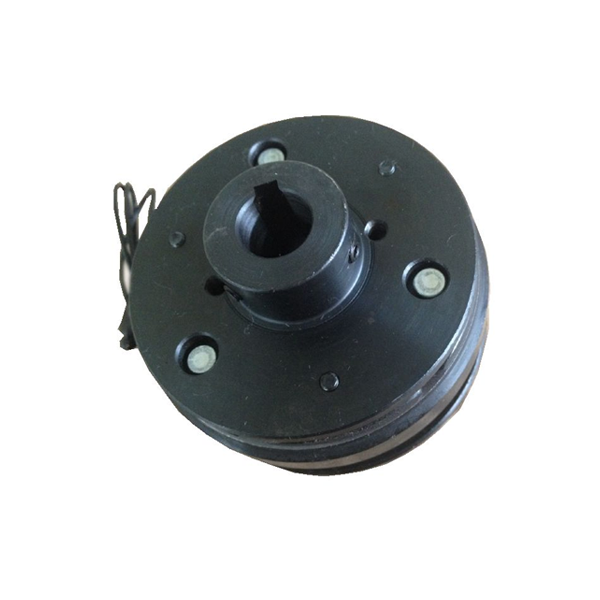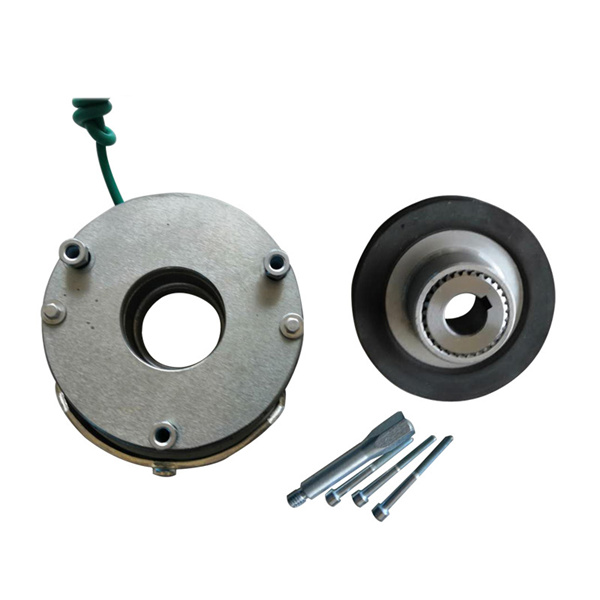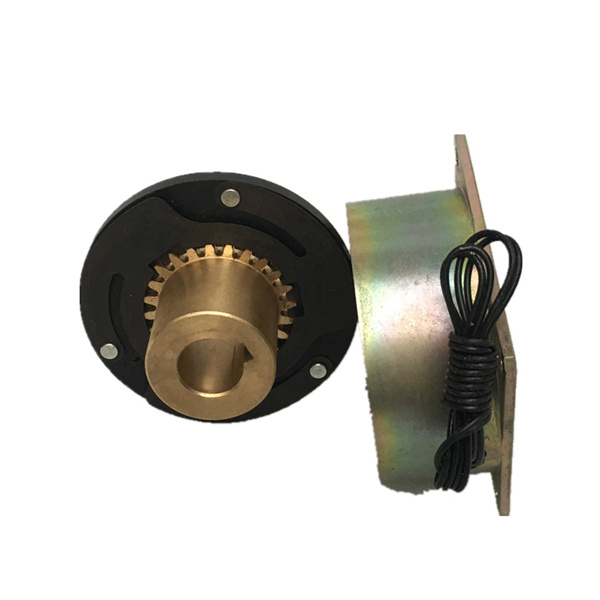




What Is an Electromagnetic Clutch and How Does It Work
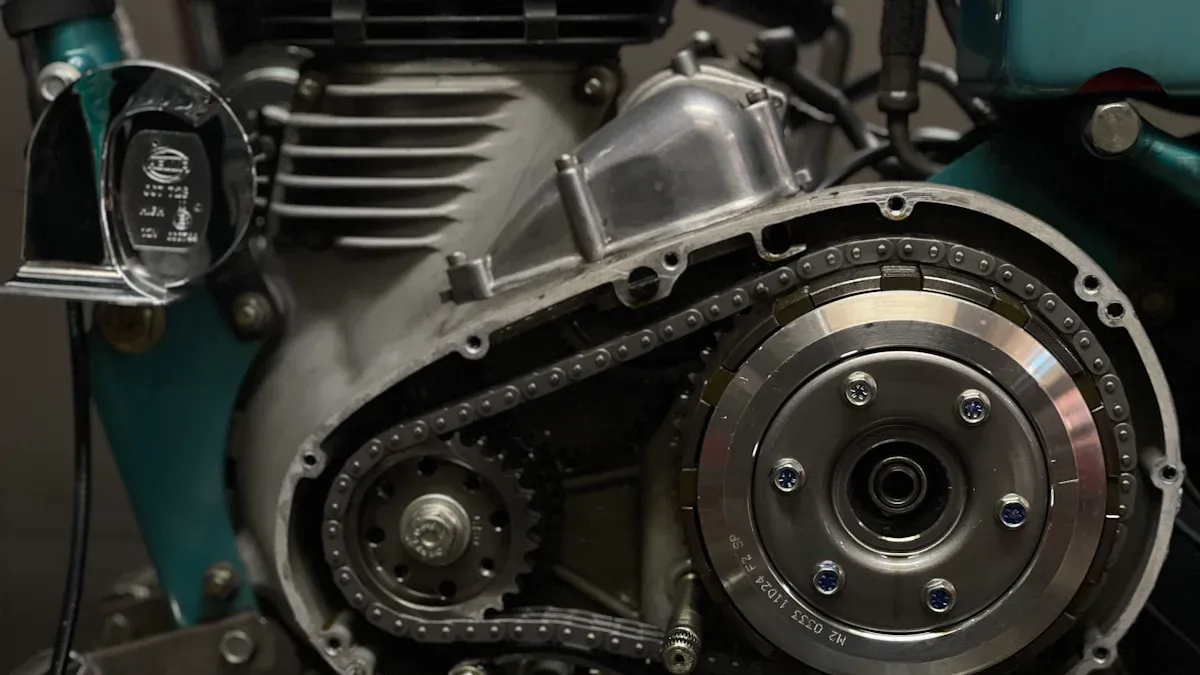
You see electromagnetic clutch technology in many machines nearby. This device needs electricity to work but sends torque using parts. When you turn on the clutch, an electromagnetic coil makes a magnetic field. The armature reacts and links the rotor. The rotor then moves the machine. Knowing how the clutch works shows why it matters. More than half of automated systems use electromagnetic clutches for steady torque transmission.
Component | Description |
|---|---|
Coil | Makes a magnetic field when electric current goes through it. |
Armature | Connects or disconnects the mechanical link using the magnetic field. |
Rotor/Friction Surface | Gives the area for torque to move. |
Housing | Holds the parts and keeps the clutch together. |
Key Takeaways
Electromagnetic clutches use electricity to make a magnetic field. This field connects or disconnects machine parts. It helps control torque very well.
These clutches work fast and move smoothly. They are great for cars, machines, and robots.
You need to take care of them often. Look for wear, noise, and heat. This helps the clutch work better and last longer.
Electromagnetic clutches save energy and need less care. They are easier to keep up than mechanical clutches. This saves you time and money.
Pick the right clutch by checking its torque range and voltage. Make sure it fits your machine for the best results.
Electromagnetic Clutch Basics
Definition
You can see an electromagnetic clutch in many machines. It helps control how things move. This device uses electricity to make a magnetic field. When you send direct current to the coil, the magnetic field pulls the armature. The armature then connects two spinning shafts. This lets the clutch send torque from one shaft to another. If you turn off the current, the magnetic field goes away. The shafts then disconnect from each other. This process lets you choose when machine parts move together or stay apart.
The main idea behind the electromagnetic clutch is easy to understand. The coil makes a magnetic field. The field pulls the armature. The armature connects the shafts. You can start or stop the connection by turning the current on or off. This way, you can control machines fast and safely.
Key Features
Electromagnetic clutches are special because they work fast and smoothly. You can use them in many machines. Here are some features that make the electromagnetic clutch stand out:
Feature | Description |
|---|---|
You can connect or disconnect machine parts very exactly. | |
Magnetic attraction operation | The clutch works when you give it current and stops when you take it away. |
Single plane monodisk | The design is simple and strong, so it works in many machines. |
Standard voltage 24 V.d.c. | Most electromagnetic clutches use 24 volts, which fits many machines and cars. |
Compatibility with most manufacturers | You can use these clutches with parts from many brands, so they are easy to install. |
You will find different types of electromagnetic clutches in factories. Each type is made for a special job. The table below shows some common types and what they do:
Product Name | Voltage | Versions | |
|---|---|---|---|
Kendrion Clutches | N/A | 24 V | Flange and shaft versions available |
Active Clutch Line | 0.2 Nm - 150 Nm | 24 V | Face mounted, flange mounted, shaft mounted |
INTORQ 14.105 | 7.5 Nm - 480 Nm | 24 V | 5 sizes available |
INTORQ 14.100 | 0.3 Nm - 3.6 Nm | 24 V | Flange and shaft mounted versions available |
Tip: Pick the right electromagnetic clutch by checking the torque range, voltage, and how it mounts. This helps you find the best clutch for your machine.
Electromagnetic clutches work better than many mechanical clutches. You get smooth action at any speed. The clutch can handle high torque and does not slip. It lasts a long time and does not waste much power. This makes the electromagnetic clutch a good choice for machines that need quick and steady control.
Electromagnetic Clutch Operation
Components
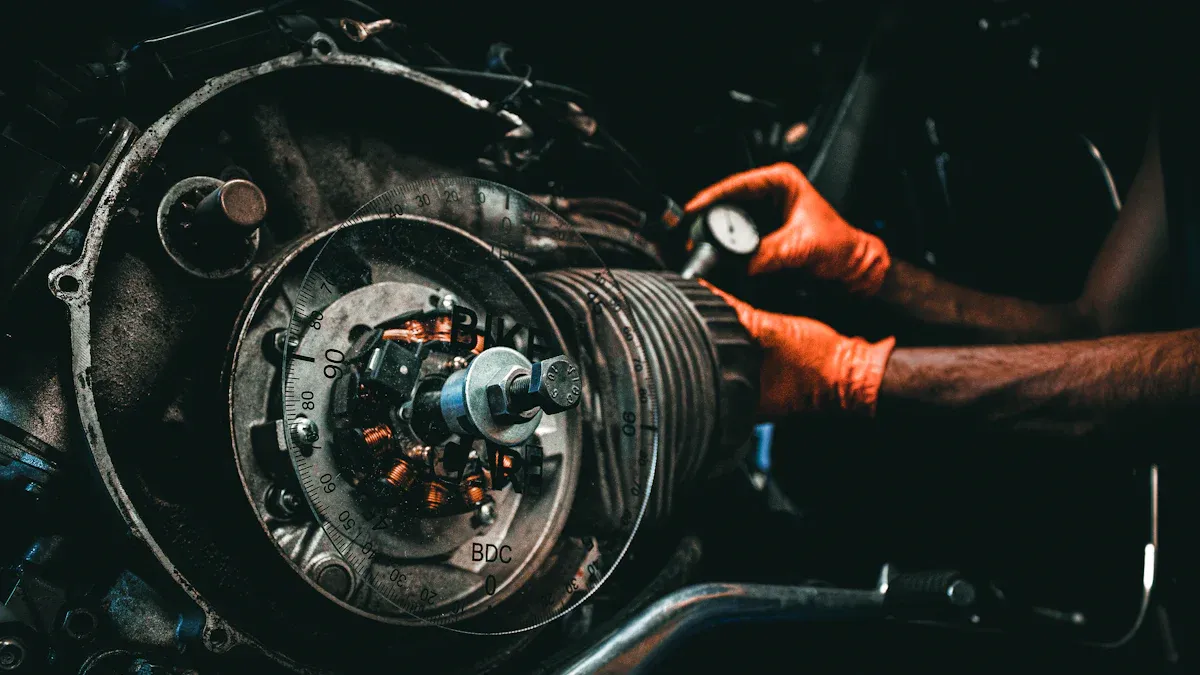
An electromagnetic clutch has many important parts. Each part does a different job. The clutch needs both mechanical and electrical parts to work. The table below lists the main parts and what they do:
Component | Role |
|---|---|
Clutch Coil | When you add electricity, it becomes an electromagnet and makes magnetic lines. |
Rotor | The magnetic lines make the rotor magnetic. It joins with the armature to send torque. |
Armature | The armature locks to the rotor when current is on. It unlocks when the current is off. |
Springs | Springs keep space between the armature and rotor when power is off. They help the clutch open. |
All the parts work together as a team. The coil uses electromagnetism to make a magnetic field. The rotor and armature use this field to join and move torque. Springs help the clutch open when needed.
Working Principle
You use electricity to control the electromagnetic clutch, but it sends torque with mechanical force. This makes it different from other clutches. The process starts when you put DC voltage to the coil. The coil becomes an electromagnet. It makes magnetic lines that go across the air gap to the rotor. The rotor gets magnetized and pulls the armature close.
Here is a simple step-by-step guide:
You put DC voltage to the clutch coil.
The coil makes a strong magnetic field with electromagnetism.
The magnetic field beats the spring force and pulls the armature to the rotor.
The armature pushes on the rotor. Friction surfaces touch and lock.
The clutch sends torque from the driving shaft to the driven shaft.
When you take away the voltage, the magnetic field goes away.
Springs push the armature away from the rotor. The clutch opens and stops sending torque.
Note: The electromagnetic clutch works very fast. In many machines, the clutch can open or close in just 10–15 milliseconds. This quick action helps you control machines very well.
You see how the electromagnetic clutch uses electricity to control movement. The clutch can start or stop sending torque almost right away. You get smooth and steady work in your machines. The electromagnetic clutch is great for high-speed and high-use jobs. You can count on it for exact control.
Clutch Construction
Main Parts
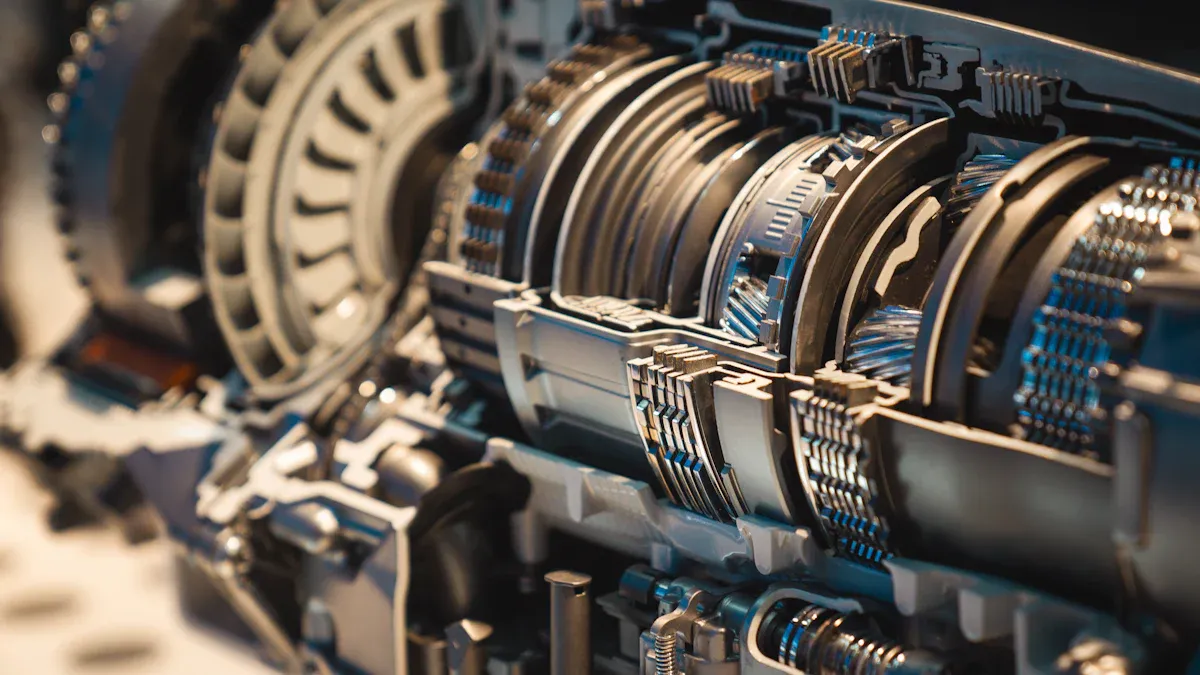
Every electromagnetic clutch has several key parts. Each part does something important. The mechanical and electrical parts work together. They help move power and control how things spin. Here is a table that lists the main parts and their jobs:
Component | Function |
|---|---|
Coil Assembly | Generates a magnetic field when energized, engaging the clutch by pulling the armature. |
Rotor | Attached to the input shaft, it works with the armature to transmit torque. |
Armature | Connects to the output shaft, pulled into contact with the rotor to engage the clutch. |
Steel Shell | Houses the coil and concentrates the magnetic flux for effective operation. |
The coil assembly sits inside a metal case. The rotor is joined to the input shaft. The armature connects to the output shaft or a pulley. The steel shell keeps all the parts together. It also helps the magnetic field work better. When you use the clutch, these parts work together. They move torque from one shaft to another.
Tip: The clutch design lets you control machines fast and safely with electromagnetism.
Materials
The materials in an electromagnetic clutch matter a lot. Good materials help the clutch work well and last longer. You need strong materials that can handle heat and rubbing. The friction disc uses special materials that grip well. This disc touches the coil when the clutch is on. It makes a strong link to send torque from the motor to the driven shaft.
Here is a table that lists common materials and what they do:
Component | Material Used | Purpose |
|---|---|---|
Electromagnetic Coil | Copper or aluminum wire | Generates a magnetic field when current passes through it. |
Rotor | Steel or iron | Conducts magnetic flux and engages with the armature. |
Friction Disc | High-friction materials | Creates a strong connection to transmit torque from the motor to the driven shaft. |
Armature and Rotor | Mild steel or alloy steel | Provides strength and resists wear for demanding jobs. |
Friction Lining | Composites or ceramics | Balances high friction, durability, and temperature resistance. |
Copper or aluminum wire in the coil makes a strong magnetic field. Steel or iron in the rotor and armature gives strength. These metals also help the magnetic field move. The friction disc uses materials that grip well. This helps the clutch send torque without slipping. Composites or ceramics in the friction lining help the clutch last longer. They work well even when things get hot.
The number of coil turns and the current you use also matter. They change how strong the magnetic field is. This affects how much force the clutch can use and how much power it needs. Picking the right materials and design helps your machine work better and last longer.
Pros and Cons
Advantages
Electromagnetic clutches have many good points for machines. The clutch works fast and does not make much noise. This helps your equipment run better and quieter. The clutch gives you exact control because of its strong spring sheet. You do not need to worry about lining up parts when you put it together. This makes installation easy. The clutch uses a tough film that does not have asbestos. This helps it last longer.
You can change the space between friction surfaces. This lets you keep the clutch working well and adjust it while the machine is on.
The clutch can send a lot of torque, from 6 to 400Nm. You can use it in many machines.
The electromagnetic clutch comes as one piece. You install it easily and save space but still get strong torque.
You do not need extra linkages or devices. The clutch works with a simple DC power supply.
You do not need oil, so you save time and money on upkeep.
The clutch can let go by itself to protect your equipment from harm or too much heat.
You get better safety for yourself and others near the machine.
Electromagnetic clutches help machines work better by letting you turn them on or off at any speed. You get strong torque without slipping. This means less wear and fewer breakdowns. The clutch works smoothly at many speeds, so your equipment runs with less noise and less damage.
Disadvantages
Electromagnetic clutches have some problems you should know. Sometimes, the clutch slips and does not send torque well. This can happen if the force is too weak, the friction parts are worn, or the voltage is too low. The clutch may also drag and stay partly on when it should be off. This causes more wear and heat.
Disadvantage | Symptoms | Possible Causes |
|---|---|---|
Slipping Clutch | Does not send torque, works less well. | Weak force, worn friction, wrong air gap, low voltage, or heavy load. |
Clutch Drag | Stays partly on, causes wear and heat. | Dirty friction, parts not lined up, stiff armature plate. |
Excessive Noise/Vibration | Strange sounds or shaking when working. | Parts not lined up, worn parts, loose connections, big air gap. |
Failure to Engage/Disengage | Does not work right, affects torque. | Weak force, broken parts, bad connections, wrong air gap. |
Overheating | Too much heat, works worse and wears out. | Always on, slipping, bad cooling. |
You may need to spend a lot at first if you want the newest clutch. Putting the clutch in different machines can be hard. Sometimes, new technology may replace old clutch designs. Problems with getting parts can also make it hard to find what you need.
You should check the clutch often for wear, noise, or heat. Good care helps you stop most problems and keeps your machines safe.
Applications
Automotive
You can find the electromagnetic clutch in many cars and trucks. This clutch helps control car parts quickly and accurately. It is used in air conditioning compressor clutches, hybrid drive clutches, and accessory drives. These systems use electromagnetic force to connect or disconnect parts fast.
Air conditioning compressor clutches turn the compressor on or off to keep your car cool.
Hybrid drive clutches help switch between electric and gas power.
Accessory drives use the clutch to control pumps and fans.
Electromagnetic clutches are used more in hybrid and electric cars. There is a 29% increase in demand for these clutches in automated vehicles. These clutches work faster and send torque better than old mechanical ones. The market for electromagnetic clutches was USD 1.48 Billion in 2025. Experts think this market will grow as more cars use hybrid systems and need better control.
Industrial Machinery
You see the electromagnetic clutch in many factory machines. Printers, packaging machines, food equipment, mixers, and cash counters all use this clutch. The clutch helps these machines work faster and safer.
You can add the clutch to machines easily.
The clutch costs less than many other choices.
You can match speeds for line shaft jobs.
You control heavy loads with small signals.
The clutch works well even in hard conditions. It needs little care and switches quickly. The clutch can handle many cycles and works in different temperatures and voltages. Some companies make special clutches for unique jobs.
Other Uses
Electromagnetic clutches help in many other areas. You see them in aerospace, defense, medical, oil and gas, renewable energy, and automation.
Industry/Application | Description |
|---|---|
Aerospace | Used in actuation systems for planes. |
Defense | Used in drones and military vehicles. |
Industrial Automation | Used in robots and automation systems. |
Medical | Used in imaging and robotic surgery tools. |
Oil and Gas | Used in valve actuators and control systems. |
Renewable Energy | Used in energy generation equipment. |
You also find the clutch in robots, office machines, and automated systems. In robots, the clutch lets motors stop or start for safe movement. Office machines like printers use the clutch to move rollers and feed paper at the right time. Automated systems use the clutch for quick and reliable action.
Tip: Pick the right electromagnetic clutch by checking the speed, torque, and control you need. Many industries use this clutch because it works fast and is strong.
You now understand how an electromagnetic clutch works and why it matters in many machines. The table below shows different types and their uses:
Type of Clutch | Description |
|---|---|
Single-Face Clutches | Used in cars and copiers |
Multiple-Disc Clutches | Good for robots and machine tools |
Tooth Clutches | Best for precision jobs |
Micro Clutches | Fit in small devices |
Knowing the pros and cons helps you pick the right clutch.
Fast and smooth action
Needs electricity to work
Can wear out over time
You should check the function, load, and size before choosing a clutch. New trends focus on energy efficiency and smart controls. This knowledge helps you make better choices for your machines.
FAQ
What is the main job of an electromagnetic clutch?
An electromagnetic clutch connects or disconnects two spinning shafts. It lets you choose when power moves between machine parts.
How do you turn on an electromagnetic clutch?
You give DC voltage to the coil. The coil makes a magnetic field. This field pulls the armature to the rotor. The clutch sends torque after that.
Where do you find electromagnetic clutches?
Electromagnetic clutches are in cars, robots, and office machines. You also see them in factory equipment. They help control movement and power in these devices.
How do you keep an electromagnetic clutch working well?
Check for wear, noise, and heat often. Clean the friction surfaces. Adjust the air gap if you need to. Taking care of the clutch helps it last longer.
Can you use electromagnetic clutches in high-speed machines?
Yes! Electromagnetic clutches work in high-speed machines. They open and close very fast. You get smooth control in just milliseconds.