




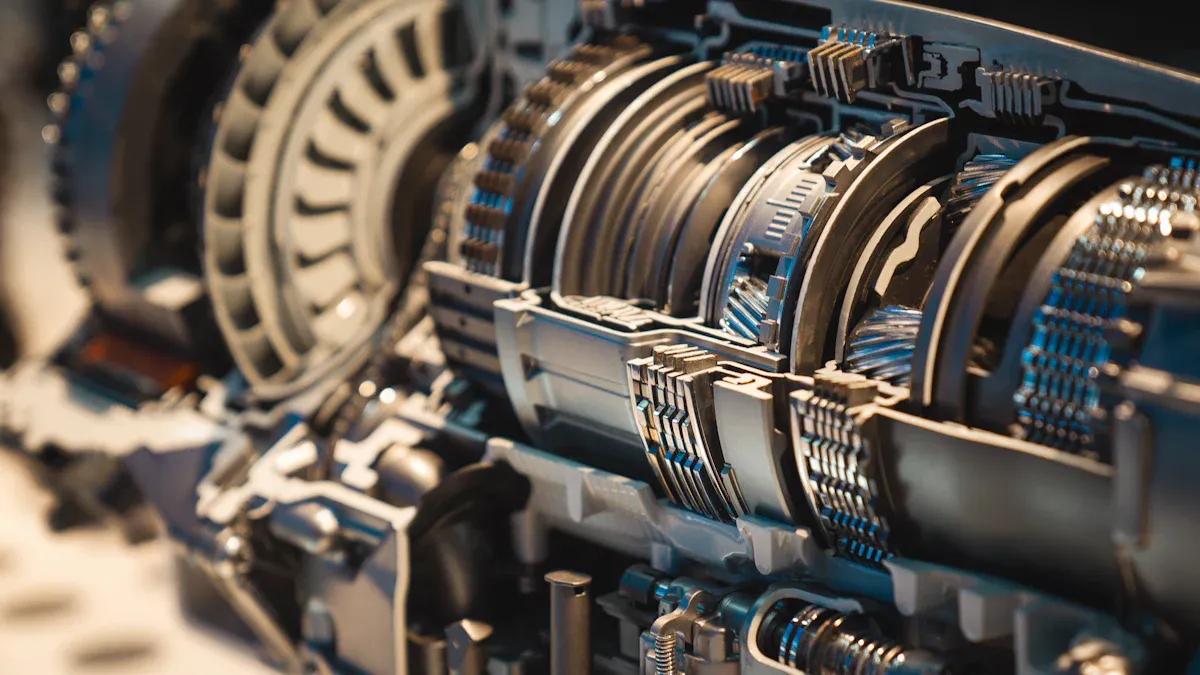
A sprag clutch lets you control the direction of movement in machines. This device uses small parts called sprags that tilt and wedge between two surfaces when the shaft turns forward. The wedging action locks the parts together and stops any backward motion. You find this design in many machines where reverse movement could cause problems or damage.
The global market for these clutches is projected to reach 1,664.0 million US dollars in 2025.
By 2035, the market will likely grow to 2,500.0 million US dollars, with a 4.2% annual growth rate.
Key Takeaways
A sprag clutch lets things move one way. It stops things from going backward. This helps keep machines safe from harm.
These clutches work by themselves. You do not need extra controls. They are good for many jobs in factories.
You must take care of sprag clutches often. This means adding oil and checking them. This helps them last longer and work well.
Picking the right sprag clutch is important. You need to think about how much force it can handle. You also need to know what your machine needs.
Sprag clutches are in many machines. You can find them in elevators and conveyor belts. They help make machines safer and work better.
Sprag Clutch Basics
What Is a Sprag Clutch
You can think of a sprag clutch as a special type of one-way clutch. It lets a shaft turn in one direction but stops it from turning the other way. This device uses small, curved pieces called sprags. These sprags fit between two rings, called races. When you turn the shaft in the allowed direction, the sprags tilt and wedge themselves between the races. This action locks the races together and lets the clutch transmit torque. If you try to turn the shaft the other way, the sprags slip and the clutch spins freely.
Sprag clutches stand out from other one-way clutches because of their unique design. You do not need any outside control to make them work. They engage automatically when needed. They also give you more torque for their size than roller overrunning clutches or ratchets. The contact points inside a sprag clutch keep changing as it works, so no single spot wears out too fast. This makes the clutch last longer and work more smoothly.
Here is a table that shows different types of sprags and how their design affects performance:
| Sprag Type | Description |
|---|---|
| Centrifugally Disengaging Sprag | Centrifugal force lifts the sprag from the inner race, using a spring to keep contact. |
| Centrifugally Engaging Sprag | Centrifugal force pushes the sprag harder against the inner race, increasing grip. |
| Neutral Sprag | Centrifugal force does not affect this type, so it stays neutral during operation. |
How a Sprag Clutch Works
You might wonder, how does it work? The answer lies in the clever shape and movement of the sprags. When you apply force in the forward direction, the sprags tilt and wedge tightly between the inner and outer races. This locks the two races together and lets the clutch transfer torque from one part to another. If you try to turn the shaft backward, the sprags lose their grip and the races spin freely. This action protects your machinery from damage caused by reverse motion.
Sprag clutches come in many sizes and can handle a wide range of torque. Here is a table that shows some typical torque capacities and bore sizes for industrial sprag clutches:
| Torque Capacity (Nm) | Bore Size (mm) |
|---|---|
| 53 to 588 | 10 to 60 |
| 1 to 2673 | 2 to 240 |
| 609 to 14,060 | 38.09 to 220 |
You will find sprag clutches in many machines, from conveyor belts to elevators. Their ability to lock in one direction and spin freely in the other makes them a key part of safe and reliable machinery.
Tip: When you choose a sprag clutch, always check the torque capacity and the type of sprag. This helps you match the clutch to your machine’s needs.
Functions & Uses
Industrial Applications
Sprag clutches work in many big machines. You find them in conveyor systems and elevators. They also help in industrial drives. These devices stop machines from moving backward. The sprag tilts and locks the races together. This stops any reverse movement. It keeps your equipment safe. You do not need to fix broken parts as often.
Sprag clutches send torque in only one way. They work well without extra power or controls. Factories use sprag clutches to keep conveyor belts moving forward. If the power goes out, the clutch stops products from rolling back. This keeps workers safe.
Here is a table that shows why sprag clutches help conveyor systems and heavy-duty machines:
| Benefit | Description |
|---|---|
| Safety | Stops products from rolling back and keeps workers safe. |
| Torque Capacity | Handles high torque and protects the conveyor. |
| Operational Efficiency | Needs no power, so it works even if power fails. |
| Redundancy | Lets you switch motors quickly during repairs or failures. |
Tip: Always check the torque rating before you install a sprag clutch. This makes sure the clutch fits your machine and works well.
Backstop Clutch Example
The Tianniu Backstop Clutch shows how a sprag clutch works. You use this clutch in fast industrial machines. Its design uses a bearing non-contact wedge type one-way clutch. The sprag inside stops reverse rotation and overrunning speed. The outer ring lets the shaft spin freely in one direction. This gives you smooth operation.
Here is a table with features of the Tianniu Backstop Clutch:
| Feature | Description |
|---|---|
| Type | Bearing non-contact wedge type one-way clutch |
| Function | Stops reverse rotation and overrunning speed |
| Design | Outer ring lets freewheeling in one direction |
| Application | Works well in fast industrial machines |
When you use the Tianniu Backstop Clutch, you get safe torque transfer and protection from reverse motion. This clutch helps your equipment run safely and smoothly.
Design & Operation
Sprag Clutch Components
You can understand a sprag clutch by looking at its main parts. The most important part is the sprag. Each sprag has a special shape that lets it wedge between two smooth rings called races. The inner race sits on the shaft, and the outer race fits around it. The sprags sit in a circle between these races. Ramps on the outer race help guide the sprags into the right position.
You also find needle rollers and support bearings in many sprag-type clutches. Needle rollers help the clutch handle heavy loads. They sit in a plastic cage and roll between the races. Support bearings keep everything lined up and let the clutch spin smoothly. These parts work together to make sure the clutch can send power in one direction and spin freely in the other.
Modern sprag clutches use lightweight, high-strength alloys. These materials make the clutch last longer and resist wear. Precision engineering helps reduce friction and improve how much weight the clutch can carry. You see these designs in many industries, including aerospace and renewable energy.
Engagement Mechanism
The way a sprag clutch locks and unlocks is simple but clever. When you turn the shaft in the drive direction, the sprags tilt and wedge tightly between the inner and outer races. This action locks the races together and lets the clutch send torque from one part to another. If you try to turn the shaft the other way, the sprags lift away from the ramps. The clutch then spins freely without locking.
Here is how the design and arrangement of sprags affect how the clutch works:
The wedging action of each sprag creates a strong locking effect when the inner race moves faster than the outer race.
Sprags have an uneven shape that helps them grip in one direction.
The position of each sprag between the races stops reverse motion.
Ramps on the outer race guide the sprags so they lock when you apply torque.
Sprag clutches stand out from other one-way clutches. They use smooth, round surfaces instead of ramps and holes for rollers. This makes the design more compact and lets you fit more sprags inside. You need less rotation to engage a sprag clutch compared to a roller ramp clutch. This means the clutch reacts faster and takes up less space.
Freewheel Action
You see the freewheel action when the output spins faster than the input. The sprags act as one-way devices. When you apply force in the drive direction, the sprags tilt and grip the races. When the output moves ahead, the sprags slip and let the clutch spin freely. This action happens automatically. You do not need any extra controls.
Here is a simple list of what happens during freewheel action:
Sprags tilt and grip when you turn the shaft forward.
When the output moves faster, the sprags slip and the clutch freewheels.
The clutch switches between locking and freewheeling on its own.
Sprag-type clutches give you smooth and reliable operation. You get strong torque transfer in one direction and easy freewheeling in the other. This design protects your machinery and keeps everything running safely.
Pros, Cons & Maintenance
Advantages of Sprag Clutch
You get many benefits when you use a sprag clutch in your machines. Here are some key advantages:
Sprag clutches last longer than roller clutches because of their strong and complex design.
They work well at high speeds, which helps reduce wear and power loss.
The design lets you transfer torque efficiently, making them a good choice for high-performance machines.
You do not need extra controls or power to make them work. The clutch engages and disengages automatically.
Sprag clutches fit into compact spaces and handle heavy loads with ease.
Tip: If you want a clutch that works smoothly and lasts a long time, a sprag clutch is a smart choice.
Limitations & Common Issues
Even though sprag clutches offer many benefits, you should know about some common issues:
High loads can pull threads out of the case, especially if the idler sprocket faces too much force.
Starting engines with high torque can stress the clutch and cause wear.
Tight fits between crank and case may lead to clutch failure.
Kickback during engine start can damage clutch surfaces.
Machines with high compression or heavy rotating parts may put extra strain on the clutch.
If you hear odd noises like "whirring" or "clacking," the clutch may need attention.
You can avoid many problems by choosing the right clutch size and checking your machine for signs of stress.
Maintenance Tips
You keep your sprag clutch working well by following a few simple steps. Proper lubrication is very important. Always make sure there is enough oil or grease to prevent metal parts from rubbing together. For oil bath systems, keep about one-third of the clutch height in oil. For greased clutches, fill 30-60% of the space with grease.
Regular inspection helps you spot wear, heat, or misalignment early. Check the clutch at least once a year. If your machine carries people, do a full teardown every 3 to 5 years.
| Inspection Type | Frequency |
|---|---|
| Annual Inspection | Once a year |
| Teardown Inspection | Every 3 to 5 years (if used for picking up people) |
If you notice hard starts or strange noises, check the starter and measure the amp draw. Replace worn parts as needed to keep your machine safe and reliable.
You have learned that a sprag clutch controls movement in one way. It helps protect machines from damage. When you pick a clutch, think about these important things:
The parts that touch must be hard and smooth.
Make sure the clutch fits your torque and load needs.
Bigger clutches can handle more torque.
Use the right oil or grease for your machine’s temperature.
| Factor | Impact on Safety and Efficiency |
|---|---|
| Technological Innovation | Makes machines work better and keeps them safe. |
| Regulatory Compliance | Follows safety rules and lowers the chance of problems. |
| Operational Efficiency | Cuts down on repairs and helps machines last longer. |
| Certification | Relevance |
|---|---|
| ISO 9001 | Shows good quality for important uses |
| SGS | Proves the clutch meets car industry rules |
If you need strong one-way control for hard jobs, the Tianniu Backstop Clutch gives you power and safety.
FAQ
What is the main purpose of a sprag clutch?
You use a sprag clutch to let a shaft turn in one direction and stop it from turning the other way. This keeps machines safe and prevents damage from reverse motion.
How do you know if your sprag clutch needs maintenance?
You should listen for strange noises like clicking or grinding. You may also notice slipping or loss of power. Regular checks help you spot these signs early.
Can you install a sprag clutch by yourself?
You can install a sprag clutch if you follow the instructions and have basic tools. For complex machines, you should ask a professional for help.
Where do you find sprag clutches in everyday life?
You find sprag clutches in elevators, conveyor belts, and some bicycles. They help these machines move safely in only one direction.