




What is a shaft coupling and how does it work

A shaft coupling joins two shafts together so power can move from one side to the other. You use a coupling when you need to connect a driving shaft to a driven shaft in a machine. This part lets the shafts be a little out of line and helps lower shaking. Shaft couplings give you more options and help keep your equipment safe from wearing out unevenly.
You count on couplings to help machines work well.
Couplings take in shocks and make putting parts together easier.
Key Takeaways
Shaft couplings join two shafts together. They help power move easily. They also lower damage to machines.
Pick flexible couplings for machines that may not line up. Use rigid couplings when you need exact alignment.
Check couplings often for damage. Add oil to them to help them last longer.
Know which coupling to use by looking at load, speed, and alignment. This helps machines work better.
The right coupling stops machines from breaking. It also helps them work faster and better.
Shaft Coupling Functions
Power Transmission
A shaft coupling connects two shafts so power can move between them. This lets energy, motion, and torque go from one part to another. Using a coupling helps power move smoothly and works well. It stops big energy losses and keeps machines from stopping suddenly.
You join two shafts to move power and torque.
You keep power moving steady and safe.
The coupling can protect your system if there is too much load.
Tip: A good coupling can stop other machine parts from breaking. It works like a fuse when there is a sudden overload.
Misalignment Compensation
It is hard to make two shafts line up just right. Shafts can get out of line from mistakes, wear, or movement. A coupling helps fix these problems. There are different couplings for misalignment, like sleeve, disc, or diaphragm couplings. These types let power keep moving even if the shafts are not lined up.
Couplings help with shaft misalignment and mistakes in position.
The coupling can stop stress and damage by fixing misalignment.
Your system keeps working even if the shafts move a bit.
Vibration and Shock Absorption
Machines can shake and make shocks when they move power. A coupling helps control these forces. Flexible couplings can take in vibration and lower shock. This keeps your equipment safe and helps it last longer. The flexible part of the coupling works with the shafts and bearings to control shaking.
| Key Findings | Description |
|---|---|
| Role of Couplings | Couplings help with vibration and shock by being flexible. |
| Dynamic Analysis | Couplings help with misalignment and unbalanced mass. |
| Nonlinear Effects | Couplings change vibration with their stiffness and design. |
You get smoother machine work and less wear when you use the right coupling for vibration and shock.
Shaft Coupling Types
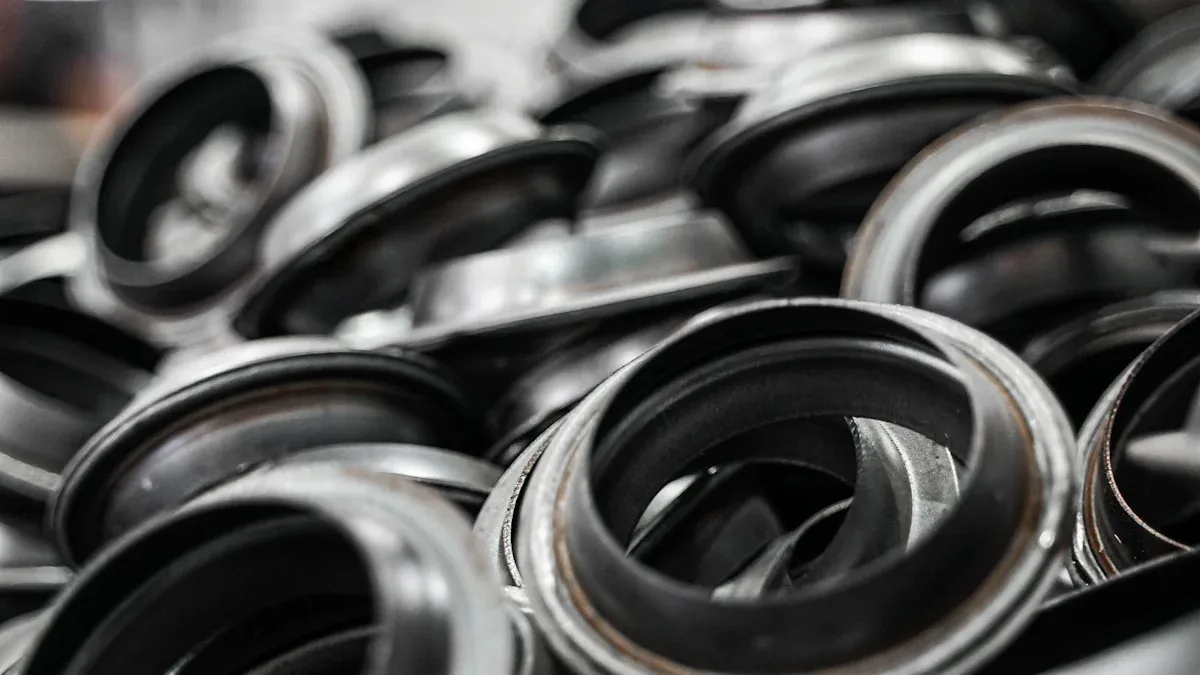
There are two main kinds of shaft coupling. These are rigid coupling and flexible coupling. Each one has its own use and features. You pick the right one based on how much the shafts might move or not line up.
| Category | Description |
|---|---|
| Rigid Couplings | Connect two shafts in precise alignment, transmitting power without allowing for misalignment. Ideal for applications requiring strict coaxial alignment. |
| Flexible Couplings | Designed to accommodate misalignments and axial displacements, providing flexibility over rigid couplings. |
Rigid Couplings
A rigid coupling joins two shafts so they act like one piece. You use this when you need the shafts to line up perfectly. Rigid coupling works best if the shafts do not move out of place. You see rigid coupling in simple machines. For example, it connects a motor to a pump when both parts stay still.
Advantages of rigid coupling:
Accurate shaft alignment
Simple design
Low maintenance
Disadvantages of rigid coupling:
No misalignment compensation
Limited damping
Less tolerance for shaft deflection
Pick a rigid coupling if your machine needs perfect alignment. It is not good if the shafts move at all.
Flexible Couplings Overview
A flexible coupling lets you join two shafts even if they are not lined up. This type can handle small mistakes in alignment. It also takes in vibration and lowers stress on other parts. Flexible coupling is common in machines that move or shake. It is also used when you expect the shafts to shift.
| Feature | Flexible Couplings | Rigid Couplings |
|---|---|---|
| Flexibility | Accommodate end movement and misalignment, mitigate vibrations | Maintain precise alignment, no movement allowed |
| Torque | Absorb some torque, less efficient in transmission | Transmit torque efficiently due to no damping |
| Maintenance | Generally require more maintenance due to moving parts | Demand less maintenance with fewer moving parts |
Advantages of flexible coupling:
Accommodate slight misalignments
Reduce stress on bearings
Excellent vibration damping
Generally low maintenance
Disadvantages of flexible coupling:
Lower torque capacity
Bulkier design
Higher cost compared to rigid coupling
You use flexible coupling in machines that must keep working if the shafts move or shake.
Flexible Coupling Types (Clamping, Encoder, Sliding, Spring, Bellows)
Flexible coupling comes in many types. Each one is made for a special job. Here are some common types you might use:
Clamping Coupling
A clamping coupling joins two shafts with a sleeve and clamp shell. It holds the shafts tight and can handle small misalignments. You see clamping coupling in machine tools and robots. It is good when you need a strong and exact connection.Encoder Coupling
Encoder coupling connects a shaft to an encoder. It helps stop stress on the encoder shaft and bearings. You use encoder coupling in automation and measuring tools. It gives smooth motion and accurate readings. It also takes in vibration, so the encoder lasts longer.Sliding Coupling
Sliding coupling uses a split shell to join two shafts. It lets the shafts move a little back and forth. This helps when shafts get longer or shorter from heat. You find sliding coupling in textile and food machines. These machines can heat up and change size.Spring Coupling
Spring coupling uses a spring shape to join two shafts. It can take in shocks and vibration. You use spring coupling in HVAC systems and pumps. It protects the machine from sudden loads or shaking.Bellows Coupling
Bellows coupling uses a flexible, accordion-shaped sleeve. It can handle misalignment and send torque with high accuracy. You see bellows coupling in robots and machine tools. It is good when you need both flexibility and precision.
Note: Flexible coupling is used in many fields. Machine tools use them for exact moves. Robots need them for smooth action. Measuring tools use them for correct torque transfer. Textile and food machines use them to keep running if shafts move or shake. HVAC systems use them to connect fans and pumps.
| Application Area | Description |
|---|---|
| Machine Tools | Provide precise positioning and compensate for misalignments between spindle and workpiece. |
| Robotics | Enable smooth and precise movement. |
| Instrumentation | Transmit torque between rotating and stationary components without introducing errors. |
| Textile Machinery | Transmit torque between the drive shaft and the textile fiber. |
| Food Processing Machinery | Transmit torque between the drive shaft and food processing equipment components. |
| HVAC Systems | Transmit torque between the drive shaft and fans or pumps. |
Pick the flexible coupling type that fits your machine. Each type helps your system work better and last longer.
How Shaft Couplings Work
Energy Transfer Mechanism
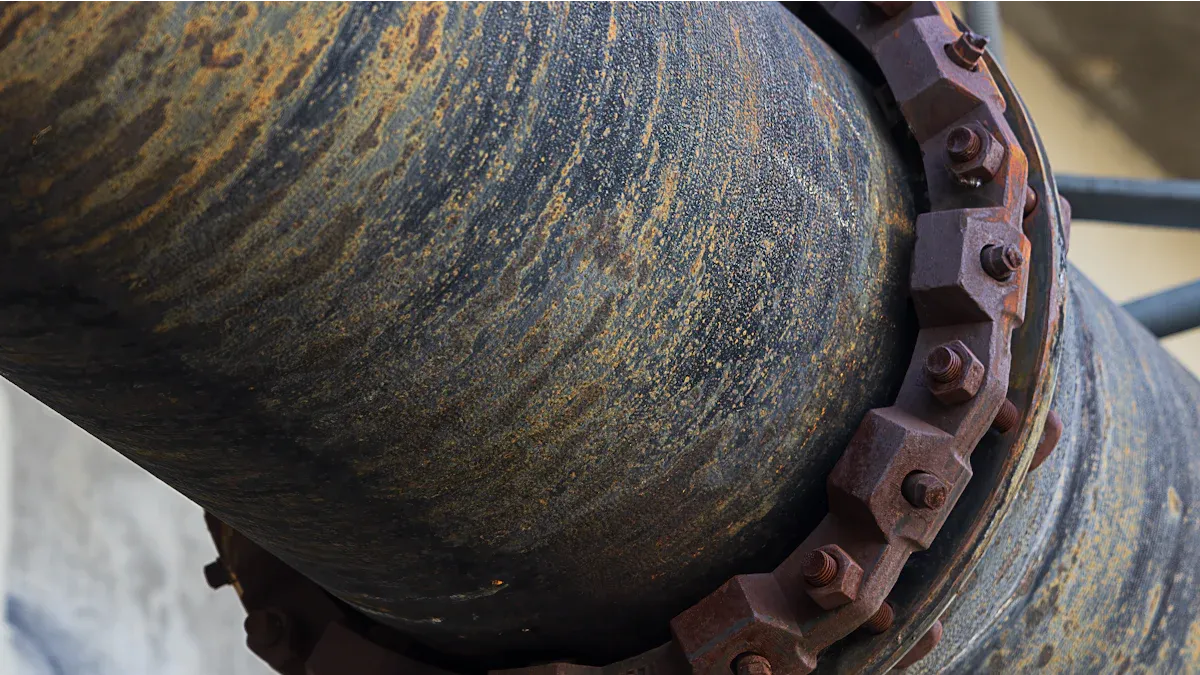
A shaft coupling links two shafts so they spin together. When the driving shaft turns, the coupling moves the motion and torque to the other shaft. This lets energy go from one machine part to another. The coupling keeps the shafts steady and spinning at the same speed.
Power moves from a motor to a pump or fan.
The coupling fixes small mistakes in shaft position.
You get smooth spinning and less noise or shaking.
The coupling helps stop damage by lowering hits and wear.
Flexible couplings have elastic parts that take in energy and fix small misalignments. This helps your machine last longer and run well. Rigid couplings need the shafts to line up just right. You must check the shafts before putting in a rigid coupling. Picking the right coupling keeps your machine safe and working well.
Handling Misalignment and Vibration
Shafts do not always line up perfectly. This can happen from heat, movement, or wearing out. The coupling helps fix these problems. It can take in misalignment and keep your machine working if the shafts move a bit.
| Feature | Description |
|---|---|
| Misalignment Accommodation | Can handle angular, parallel, and axial misalignments. |
| High Torque Transmission | Moves high torque loads with no backlash. |
| Low Moment of Inertia | Has little effect on system movement. |
| Large Through Hole | Lets small couplings fit bigger shafts. |
| Disassembly Before Installation | Good for upgrades, makes it more useful. |
You also need to stop shaking and sudden hits. The coupling has special parts to take in these forces. Some couplings use star shapes, spiral designs, or bellows to lower shaking and stop shocks. You find these in quincunx, cross-ring, helix, and bellows couplings. These designs keep your machine safe from sudden loads and help it last longer.
| Coupling Type | Design Features | Applications |
|---|---|---|
| Quincunx Coupling | Star-shaped part fixes misalignments | Medium torque, systems with shaking |
| Cross-ring Coupling | Very flexible, great at stopping vibration | Moving systems with high loads and shaking |
| Helix Coupling | Spiral shape gives strong twist and stops shaking | Precise machines, robots, CNC systems |
| Bellows Coupling | Bellows part fixes shaft misalignments | Precise jobs like servo motors |
| Shock-absorbing Coupling | Made to lower shaking and sudden hits | Jobs with changing or sudden loads |
| Magnetic Coupling | Moves torque with magnets, no touching parts | Sensitive jobs like pumps or mixers |
| Flexible Couplings | Lets shafts move a little or bend | Many factory jobs |
| Elastomeric Couplings | Made from rubber or plastic, stops shaking and hits | Jobs needing small misalignments |
Tip: If you pick a coupling with the right features, you keep your equipment safe and make it last longer.
Shaft couplings are important for joining shafts, moving energy, and keeping machines safe from misalignment and shaking.
Choosing a Shaft Coupling
Key Selection Factors
You need to think about a few things before picking a shaft coupling. The right choice helps your machine work better and last longer. First, look at the load and speed. Bigger shaft diameters can hold more load. If you make the shaft 10% bigger, it can hold about 20% more load. The length and hub size are important too. A longer coupling and bigger hub can lower stress and help the machine work well.
How fast the machine runs is also important. Fast machines need couplings that can keep up and stay accurate. You should check the torque needs. Figure out the torque by using the horsepower and rpm of your machine. Make sure the coupling can handle the torque and any sudden hits.
Misalignment is another thing to think about. Machines can have small mistakes in how the shafts line up. Flexible couplings are good if you expect misalignment. Rigid couplings are best if the shafts line up just right. You should also look at the material, bore type, and how the coupling connects to the shaft. These things change the price, how easy it is to fix, and how long it lasts.
Here is a table to help you compare important factors:
| Factor | Description |
|---|---|
| Type of coupling | Pick based on system needs and strengths. |
| Size of coupling | Match shaft size and torque. |
| Material | Affects torque rating and mass. |
| Bore types and attachment options | Choose for cost and serviceability. |
| Torque requirements | Calculate from horsepower and rpm. |
| Misalignment | Check for radial, angular, and axial errors. |
| Reactive forces | Look at forces on bearings. |
| Performance versus cost | Balance quality and price. |
| Coupling lifetime | Think about replacement and downtime. |
Application and Maintenance Tips
Always match the coupling to your machine. If your machine shakes or has misalignment, use a flexible coupling. For perfect alignment, pick a rigid coupling. Some couplings, like bellows or disc types, are good for high-torque or very exact jobs. Compression couplings are easy to take care of because they come in two pieces.
Taking care of your shaft coupling helps it last longer. Follow these tips:
Look for cracks, wear, or bending when you check it.
Put oil or grease on sliding parts before putting it back together.
Add more oil or grease every six months to stop rust and water.
Check the torque so the coupling does not slip.
Make sure the shaft fits in the coupling the right way.
Checking and taking care of your coupling helps you find problems early. Oil or grease is important for smooth work. Always do what the maker says.
If you hear noise or feel shaking, check the alignment and coupling type. Using the wrong coupling or not putting the shaft in far enough can make it break. Always use the right gap and follow the maker’s rules. Good care and picking the right coupling help your machine run safely and well.
You have learned that a shaft coupling links two shafts to move power. This helps machines work well and not stop. Each coupling type has its own job, as shown here:
| Type of Coupling | Function |
|---|---|
| Rigid Coupling | Connects shafts that line up, does not allow mistakes |
| Flexible Coupling | Fixes misalignment, gives some movement |
| Flanged Coupling | Keeps shafts lined up for heavy work |
| Universal Coupling | Lets shafts bend at an angle |
Knowing about these choices helps you pick the right coupling. When you use the best shaft coupling, your equipment stays safe. You also have less machine stoppage and better results.
FAQ
What is the main purpose of a shaft coupling?
You use a shaft coupling to connect two shafts. This lets power move from one shaft to another. The coupling also helps fix small alignment mistakes and reduces vibration.
How do you know which shaft coupling to choose?
You should check your machine’s load, speed, and alignment needs. Look at the shaft size and torque. Flexible couplings work well for misalignment. Rigid couplings fit machines with perfect alignment.
Can you install a shaft coupling by yourself?
You can install many shaft couplings with basic tools. Always follow the manufacturer’s instructions. Make sure the shafts line up and the coupling fits tight.
How often should you check or maintain a shaft coupling?
You should inspect your shaft coupling every six months. Look for wear, cracks, or loose parts. Add oil or grease if needed. Regular checks help your machine last longer.
What happens if you use the wrong shaft coupling?
Using the wrong coupling can cause noise, vibration, or even machine failure. Always match the coupling to your machine’s needs for safe and smooth operation.