




The characteristics and principles of the electromagnetic clutch
The electromagnetic clutch is also called an electromagnetic clutch. It is a kind of electromagnetic mechanical connector, applying the principle of electromagnetic induction and the friction between the internal and external friction plates, so that the two rotating parts in the mechanical transmission system and the driven parts can be combined with or separated from them, there is no need to stop the rotation of the drive unit. Is a kind of automatic execution of electrical appliances.
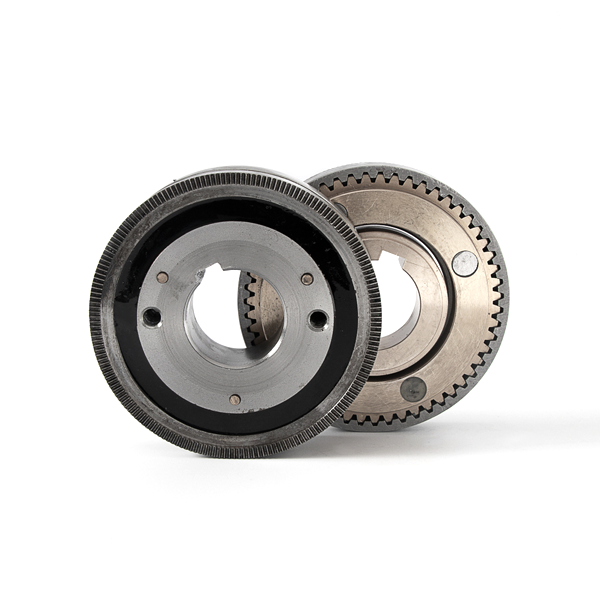
1. Basic Definition of Electromagnetic Clutch
An electromagnetic clutch is an automatic electromechanical connecting component that relies on electromagnetic induction force to control the engagement and separation of driving and driven rotating shafts without stopping the prime mover’s running. Different from mechanical, hydraulic and pneumatic clutches needing manual or extra fluid drive control, the electromagnetic clutch completes torque transmission and power cutoff simply by switching coil power on or off.
When energized, the built-in coil generates stable magnetic attraction to compress internal friction plates tightly together for power transmission; when power is cut off, spring force pushes apart friction surfaces to disconnect power output instantly. As a core automatic control part, the electromagnetic clutch supports quick start, emergency braking, speed regulation and forward/reverse switching of various mechanical equipment, widely used across dozens of industrial fields.
2. Core Working Principle of Electromagnetic Clutch
The whole working cycle of a standard electromagnetic clutch is split into two core states: engaged and disengaged, with DC power supply (common 24V as mainstream standard) as control source.
Engaging State (Power On)
After direct current flows into the built-in coil inside the clutch yoke, a stable closed magnetic field is formed around the magnetic core. Magnetic attraction pulls the movable armature and friction disc toward fixed rotor, compressing multi-layer friction surfaces closely to produce friction torque. The driving rotor’s rotational force is fully transferred to the driven shaft via compacted friction plates, finishing power connection.
Disengaging State (Power Off)
Once coil power is disconnected, magnetic field disappears rapidly. Built-in return springs pull the armature and movable friction plate away from fixed rotor automatically, creating a tiny clearance between friction faces to eliminate friction resistance. The driving part idles separately while the driven shaft stops receiving power, realizing instant power separation.
The whole switch process of a qualified electromagnetic clutch only takes milliseconds, which is the key reason for its high-frequency cyclic operation capacity in automated production lines.
3. Main Classifications of Electromagnetic Clutch
Based on internal structure, friction environment and working mode, the mainstream electromagnetic clutch on the market is divided into four major categories, each with exclusive applicable scenarios and performance features:
3.1 Single Disc Dry Type Electromagnetic Clutch
The most common standard electromagnetic clutch structure with only one group of friction pairing discs under dry, oil-free working environment. Features compact size, fast response speed, convenient installation and affordable cost. Mainly applied for low-medium torque equipment such as small printing machines, light-duty conveyors and office automation devices.
3.2 Multi-Disc Dry & Wet Electromagnetic Clutch
Equipped with multiple stacked friction plates, greatly boosting total friction area and transmission torque. Dry version works in dust-free air environment; wet type runs immersed inside gearbox lubricating oil for better heat dissipation and longer friction service life. This kind of electromagnetic clutch bears heavy load and is widely used for CNC machine tools, metallurgical machinery and large packaging production lines.
3.3 Tooth-Type Electromagnetic Clutch
Adopts concave-convex tooth meshing structure instead of friction transmission after electromagnetic attraction. Zero slip during power transmission and ultra-high transmission efficiency, but cannot engage under high-speed rotating status. Ideal for fixed-speed positioning equipment, precision indexing machinery and heavy industrial gearboxes.
3.4 Electromagnetic Clutch & Brake Integrated Unit
Combines clutch and brake into one integrated shell structure. One coil controls clutch engagement and another controls braking action, realizing instant switch between drive and stop without extra installation space, the most popular customized electromagnetic clutch for automated assembly equipment.
4. Key Performance Advantages of Electromagnetic Clutch
Compared with hydraulic and pneumatic clutch alternatives, the core strengths of choosing standard electromagnetic clutch are summarized as below:
Remote electric control: Realize long-distance start-stop and speed adjustment via wiring and control switch without on-site manual operation, convenient for full automation pipeline layout.
Ultra-fast response: Millisecond-level engage/disengage switch to satisfy high-frequency cyclic working requirements of automated equipment.
Simple structure & easy maintenance: Less auxiliary pipeline and accessory parts than hydraulic clutch, cutting later maintenance expense of the whole set of equipment.
Flexible torque range: From small 0.5Nm miniature specification up to over ten thousand Nm heavy-duty customized electromagnetic clutch, covering light to heavy load working demands.
Stable operation: Low vibration and low noise during regular working after correct installation, effectively improving equipment running stability.
5. Global Common Industrial Application Scenarios of Electromagnetic Clutch
The versatile electromagnetic clutch is widely adopted in diversified manufacturing sectors worldwide:
5.1 Printing & Packaging Machinery
Food packing machine, carton forming equipment, label printing machine and flexible packaging production line use electromagnetic clutch for intermittent feeding and instant braking control.
CNC & General Machine Tools
Lathe, milling machine, drilling machine and grinding machine rely on this clutch to control spindle start-stop and gear shifting.
Conveying & Logistics Equipment
Roller conveyor, sorting machine and lifting equipment adopt electromagnetic clutch to adjust conveying speed and emergency stop protection.
Textile & Rubber Machinery
Spinning equipment, rubber mixing machine and molding machine use clutch for periodic power switch.
Office & Household Automation
Copier, printer and small home processing equipment are equipped with miniature electromagnetic clutch for internal transmission control.
6 Practical Parameter Selection Guide for Buying Electromagnetic Clutch
Selecting the matched electromagnetic clutch directly decides long-term stable operation of machinery; buyers need to confirm five core parameters before ordering:
Rated Transmission Torque: Match actual maximum load torque of equipment, reserve 10%~15% surplus torque to avoid long-term overload slip damage of friction plates.
Rated Working Voltage: Industrial mainstream is DC24V, customized 12V/48V is available for special equipment; mismatched voltage leads to insufficient electromagnetic attraction or coil burnout.
Working Environment: Dry environment picks dry-type electromagnetic clutch, gearbox internal installation selects wet multi-disc model.
Max Rotating Speed: Confirm equipment rated RPM to avoid over-speed exceeding clutch design limit.
Installation Dimension: Check shaft diameter, installation hole size and overall thickness to fit existing equipment shell space.
7 Standard Daily Maintenance Rules for Electromagnetic Clutch
Scientific maintenance effectively extends the service life of electromagnetic clutch and reduces unexpected downtime:
Regular dust and dirt cleaning for friction surface every 30 working days; dry-type clutch strictly prevent oil contamination on friction discs to avoid slipping.
Periodically test coil input voltage with multimeter to keep voltage within rated tolerance range.
Measure armature clearance regularly, adjust spacing once beyond factory standard value.
Avoid long-time continuous energization without load to prevent coil overheating and short circuit damage.
Replace severely worn friction plates timely once thickness drops below the design limit.
8 Common Faults & Quick Troubleshooting of Electromagnetic Clutch
Most frequent breakdowns of electromagnetic clutch and corresponding solutions for on-site maintenance:
Fault 1: Clutch Cannot Engage After Power On
Causes: Coil open circuit/burnout, insufficient supply voltage, excessive armature gap, friction plate stuck by foreign debris.
Solution: Test coil resistance with multimeter to replace damaged coil; stabilize input voltage; adjust standard clearance and clean internal sundries.
Fault 2: Serious Power Slippage During Operation
Causes: Friction plate worn or stained with oil, long-term overload exceeding rated torque, insufficient electromagnetic suction from low voltage.
Solution: Clean or replace failed friction disc; optimize equipment load; fix unstable power supply.
Fault 3 Overheating & Coil Burning
Causes: Long continuous energization, frequent overload, coil insulation aging.
Solution: Optimize equipment control program to shorten continuous power-on duration; upgrade higher torque specification electromagnetic clutch if overloading frequently happens.
Fault 4 Cannot Disconnect After Power Cut
Causes: Spring fatigue failure, residual magnetism, friction plates bonded together by sticky dirt.
Solution: Replace reset spring; clean friction surfaces thoroughly.
9 Why Choose Qualified Electromagnetic Clutch from Professional Manufacturer
A high-quality standard electromagnetic clutch adopts high-purity copper coil and high wear-resistant alloy friction material, strictly following international production standards during processing:
Coil: High insulation grade enameled wire to resist overheating burnout under frequent on-off.
Friction disc: High coefficient anti-wear composite material for long service cycle and stable friction performance.
Iron core and armature: Precise machining to guarantee stable magnetic attraction under rated voltage.
Backstop Clutch’s self-produced full-series electromagnetic clutch covers small miniature to heavy-duty customized specifications, supports OEM/ODM size and parameter modification according to customer’s special equipment demands, with complete pre-sale technical parameter matching and after-sale installation guidance service.
FAQ about Electromagnetic Clutch
Q1: What’s the standard working voltage for most electromagnetic clutch?
A: DC24V is the most widely used rated voltage for regular electromagnetic clutch, customized 12V/48V is available for special mechanical equipment.
Q2: Can wet electromagnetic clutch work out of gear oil environment?
A: No, wet multi-disc electromagnetic clutch must run immersed in lubricating oil for heat dissipation; dry model is designed for oil-free air condition.
Q3: Is it allowed to overload the electromagnetic clutch for short time?
A: Short transient overload is acceptable, but long-term over torque will cause permanent friction damage and coil overheating failure.
Q4: Can we customize non-standard size electromagnetic clutch?
A: Yes, professional suppliers like Backstop Clutch provide full-size and torque customization for special mechanical layout needs.
Conclusion
As a core automatic transmission component, the electromagnetic clutch realizes flexible power connection and cutoff via electromagnetic control, bringing great convenience for modern automated mechanical production. Distinguish dry/wet, single/multi-disc and tooth-type specifications based on equipment load, rotating speed and working environment before purchasing a suitable electromagnetic clutch, follow standardized daily maintenance and fault elimination rules to maximize equipment service life and reduce production downtime loss.
Recent News
1.Essential Guide to Using Backstop Clutch in Conveyor Systems
2026-06-022.What Are Encoder Shaft Couplings and How Do They Work
2026-05-153.What is a Friction Torque Limiter and How Does It Work
2026-05-284.Electromagnetic Clutch Secrets Every Textile Mill Needs
2026-02-285.One Way Clutch Bearing Makes Packing Faster and Easier
2026-04-086.A Beginner's Guide to Overrunning Clutch Bearings
2026-04-07