




What Are Encoder Shaft Couplings and How Do They Work
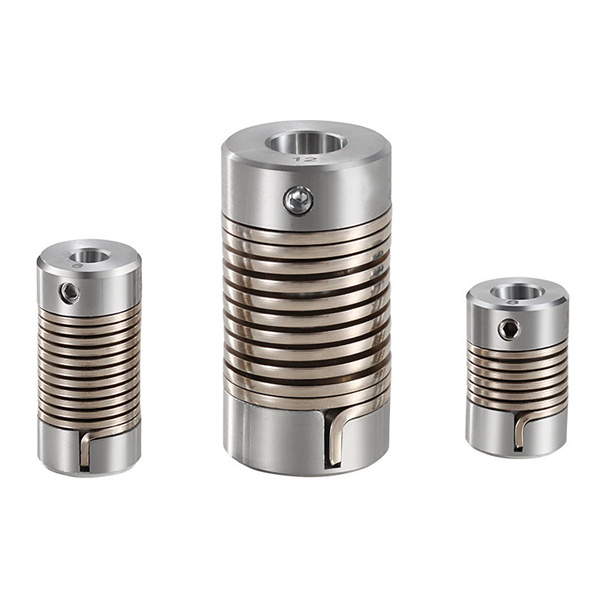
You use an encoder shaft coupling to join an encoder to a motor or machine part. This small piece is very important for moving things exactly right. It needs to be flexible, correct, and reliable for everything to work well. In this article, you will find out how an encoder shaft coupling works and see new products like flexible spring couplings made for encoders.
Key Takeaways
Encoder shaft couplings link a machine shaft to an encoder. They help move parts smoothly and protect the encoder from damage.
Pick the right coupling type for your machine. Flexible couplings can handle misalignment and vibrations. Rigid couplings need perfect alignment for the best accuracy.
Check and maintain your couplings often. This prevents wear and keeps your encoder working well. Good maintenance improves your system's overall performance.
Encoder Shaft Coupling Basics
What Is an Encoder Shaft Coupling
An encoder shaft coupling connects a machine shaft to an encoder. It helps move motion from the machine to the encoder without losing accuracy. There are different types of couplings. Some are flexible, some are rigid, and some are hybrid.
Flexible couplings let shafts move a little. They absorb vibration and are easy to install. They last long and help keep things accurate.
Rigid couplings work when shafts are lined up just right. They do not bend or flex. You must line up everything before putting them together.
Hybrid couplings mix strong twisting force with some flexibility. They help if things are not lined up and keep motion smooth.
You pick the right encoder coupling for your job. You think about how much movement, vibration, and twisting force you need.
Function and Importance
Encoder shaft coupling is important in motion control systems. It connects the encoder to the machine shaft. This lets you measure movement and position very accurately. The coupling keeps the encoder safe from stress and vibration. It helps the encoder last longer and work well.
Function/Feature | Encoder Shaft Couplings | Other Shaft Couplings |
|---|---|---|
Primary Purpose | Connects machine shaft to motion encoder | Broader torque transmission and alignment |
Misalignment Compensation | Allows for minor misalignment | Varies by type, generally compensates |
Protection of Encoder Bearings | Reduces mechanical stress and vibration on encoder bearings | Not specifically designed for this purpose |
Specific Applications | Used in roll forming machines for motion feedback | Used in various mechanical systems |
You get steady motion, help with misalignment, and protection from stress. These things help you keep feedback systems accurate. You also get better position feedback in CNC machines with no backlash, good alignment, and flexible twisting.
How Encoder Shaft Couplings Work
Motion Transmission and Misalignment Compensation
You use an encoder shaft coupling to join your machine shaft to the encoder. This part lets rotary motion move from one shaft to another. The coupling connects your device’s movement to the encoder. This helps you measure speed and position very well. The connection must stay smooth and steady, even if the shafts do not line up perfectly.
When you put in an encoder coupling, you might see the shafts are not always lined up. The coupling helps fix these small mistakes. It can handle different kinds of misalignment, like:
Parallel Misalignment: The shafts are next to each other but not in a straight line.
Angular Misalignment: The shafts meet at an angle, not straight.
Axial Misalignment: The shafts are too close or too far away.
You can check how much misalignment each coupling can handle in the table below:
Coupling Type | Angular Misalignment Capacity | Parallel Misalignment Capacity |
|---|---|---|
Bellows Coupling | 0.5° to 2° | 0.05 mm to 0.4 mm |
Oldham Coupling | Up to 3° | Up to 10% of nominal shaft diameters |
Flexible Coupling | ±3° | 0.005 in (smaller), 0.030 in (larger) |
You need to pick the right coupling for your job. If you use the wrong one, you might get problems like too much wear, loose screws, or even breakage. You can stop these problems by checking your coupling often and making sure it fits your shafts well.
Flexible vs. Rigid Couplings
You have two main choices for encoder couplings: flexible couplings and rigid couplings. Each one works best in different cases.
Flexible couplings help when shafts are not lined up just right. They can bend and twist a little. This lets them soak up vibration and lower stress on the encoder. You get less backlash, so your encoder gives better feedback. Flexible couplings also help stop damage from small shakes or bumps.
Rigid couplings are best when shafts line up perfectly. They do not bend or twist. You get great torque transmission and almost no backlash. Rigid couplings are simple and easy to take care of. You can see the main differences in the table below:
Advantages of Rigid Couplings | Disadvantages of Rigid Couplings |
|---|---|
Excellent torque transmission | Needs perfect alignment |
Low cost to make | Cannot handle any misalignment |
Almost zero windup and zero backlash | May wear out if not lined up right |
High torsional stiffness for positioning | |
Simple and easy to put together |
Tip: If you want to lower vibration and allow for some misalignment, pick flexible couplings. If you need the most precision and your shafts are lined up, rigid couplings are a good pick.
You should also think about where you use your encoder. Changes in temperature can make parts get bigger or smaller. High humidity can hurt the encoder or the coupling. You can keep your system safe by picking the right materials and checking your equipment often.
When you know how encoder shaft couplings work, you can make better choices for your machines. You keep your encoder safe, your measurements correct, and your system working well.
Types and Selection Factors
When you pick an encoder shaft coupling, you must think about what your machine needs. There are different types of couplings for different jobs. The most common flexible couplings are elastomeric, mechanical, and disc couplings. These are popular because they can handle shafts that are not lined up and can soak up vibrations. This makes them great for many encoder jobs.
For example, the GD Special Spring Coupling for Encoder from Tianniu Shaft Coupling Factory is a top pick. It has zero clearance, so it sends power smoothly with no backlash. It is made from strong zinc alloy, which means it lasts a long time and does not rust easily. Its design lets it fix radial, angular, and axial misalignment by itself. This keeps the encoder connection exact, even if the shafts are a little off. That is why it works well for jobs that need high accuracy and dependability.
You can find flexible couplings in many shapes and sizes. Each one works best in different places and times. Industry data shows elastomeric, mechanical, and disc couplings are used most around the world. People will use them even more by 2032. Elastomeric couplings use rubber or similar stuff to soak up shocks and vibrations. This makes them good for places with lots of shaking or heat changes.
When you choose a coupling, you have to think about a few things. The material is important. Aluminum is strong and not too expensive. Stainless steel is even stronger and works well in tough places. The size of the coupling must fit your shaft and the space between shafts. How you put the coupling on matters too. Clamp and set screw are common ways. Clamps are fast to use and easy to adjust. They hold tight without hurting the shaft.
Other things to think about are torque, how much misalignment the coupling can handle, and how well it stops vibration. If your job needs a lot of torque, you might need a rigid coupling. But if your machine has small misalignments or shakes, flexible couplings like the GD Special Spring Coupling are better. They help protect the encoder and make it last longer.
Picking the right encoder connection means you must know these things. You need to look at how your machine works, like speed, torque, where it is, and how often you fix it. If you choose well, your encoder will work right and give you good feedback for your system.
Picking the right encoder shaft coupling is very important. It helps your system stay accurate and work better. The right choice means your machine will not stop working as much. This helps you get more work done. If you think about things like misalignment and what the coupling is made of, your machine will last longer. You will also get better feedback from your encoder. This is important for good engineering and machines that work well.
FAQ
What is the main purpose of an encoder shaft coupling?
An encoder shaft coupling joins an encoder to a machine shaft. It lets motion move from the machine to the encoder. This keeps the movement exact. It also helps protect the encoder from too much stress.
How do you choose the right encoder shaft coupling?
You need to check the shaft size and how much torque you need. You should also look at how well the shafts line up. Think about what job the encoder does. The place where you use the coupling matters too.
Can flexible couplings handle misalignment?
Yes, flexible couplings can fix small misalignments. They help the encoder work well even if things are not perfect. This makes the encoder last longer and run better.
Recent News
1.What is a Friction Torque Limiter and How Does It Work
2026-05-282.Electromagnetic Clutch Secrets Every Textile Mill Needs
2026-02-283.One Way Clutch Bearing Makes Packing Faster and Easier
2026-04-084.A Beginner's Guide to Overrunning Clutch Bearings
2026-04-075.Top 10 Backstop Clutch Manufacturers You Should Know About
2026-03-166.Sprag type vs roller type one way clutches: Which is better?
2026-03-287.Top 10 Backstop Clutch Manufacturers in China 2026
2026-02-27